
A Challenge at the Peak of the Pyramid
In the field of pediatric urology, certain surgeries are recognized as “technologies at the peak of the pyramid.” They are not only complex to perform with strict indications but also rely heavily on systematic collaboration across multidisciplinary teams.
Recently, the pediatric surgery team at Guangzhou United Family Hospital (UFH), in collaboration with the pediatric surgery team from the First Affiliated Hospital of Sun Yat-sen University, successfully completed an ultra-high-difficulty “Sigmoid Bladder Augmentation.” This urinary system reconstruction was performed on a 14-year-old girl from the United States, successfully safeguarding her kidney function and opening new possibilities for her future.
Despair and Hope: Approaching the “Final Line of Defense”
Since birth, the patient had suffered from myelomeningocele accompanied by hydrocephalus, and had been plagued by recurrent urinary tract infections and bladder dysfunction from a young age. Although she had undergone multiple surgical interventions in the United States in her early years, the overall improvement was limited.
As she grew older, her bladder gradually entered a state of low capacity and high pressure. When she traveled to China for medical treatment, her bladder function was significantly decompensated. Preoperative urodynamic tests showed her bladder capacity was only one-tenth of that of a normal child her age, with severe vesicoureteral reflux. Accompanied by recurrent urinary tract infections and progressive kidney damage, her quality of life had declined significantly.
With conventional treatments proving ineffective, the family and the medical team were left with the final line of defense: Bladder Augmentation using intestinal tissue.
Battle at the Peak: Cross-System Extreme Reconstruction
Sigmoid Bladder Augmentation is a major reconstructive surgery that bridges the urinary and digestive systems. Surgeons must precisely intercept a segment of the sigmoid colon with its own blood supply and normal nerve control. After “detubularization” (opening the bowel segment), it is reshaped into a low-pressure urine storage structure and then tightly anastomosed (connected) with the original bladder to achieve expansion, pressure reduction, and functional reconstruction.
This procedure places extremely high demands on surgical technique, perioperative management, teamwork, and post-operative follow-up. Currently, the number of centers in China capable of maturely performing this surgery is very limited, with fewer than 50 cases performed annually nationwide. It is recognized as a high-difficulty and rare surgical procedure.
Systematic Combat: Starting Long Before the Operating Room
This was not a surgery that “started only upon entering the operating room.” The parents, the pediatric surgery team from the First Affiliated Hospital of Sun Yat-sen University, and Guangzhou United Family Hospital each had their own considerations and preparations.
For us, the challenge was: how can we maximize patient safety during such a complex surgery? This challenge brought both difficulties and a profound sense of achievement.
“Details determine success.” A month before the patient’s admission, the Guangzhou United Family Hospital team began preparations. Centered on the patient’s condition, the team conducted multiple MDT (Multidisciplinary Team) consultations before the surgery, repeatedly demonstrating the feasibility and safety of the plan—from imaging evaluation and urodynamic analysis to surgical path design. The Urology department, Pediatric ICU (PICU), Anesthesiology, Operating Room, Nursing team, Case Manager, and Insurance team collaborated throughout to form a closed-loop management system.
For example, critical preoperative bowel function tests were followed directly by dedicated nurses to build trust with the patient while gaining a comprehensive understanding of her condition. She was admitted one week prior to the surgery, with the Pediatric PICU team handling perioperative management to lay a solid foundation for the operation.
Led by Renowned Experts: Winning the Crucial Battle
On March 29, the surgery was officially performed. Under the lead and guidance of Director Xu Zhe, a senior expert in pediatric surgery from the First Affiliated Hospital of Sun Yat-sen University, the team spent seven hours on meticulous “craftsmanship.” The interception of the intestine, reshaping, and anastomosis were completed in one go. The newly constructed “expansion reservoir” was successfully integrated into the patient’s body, providing the key to significantly reducing bladder pressure and preserving the child’s precious kidney function.
Following the surgery, it took 15 days and nights of intensive care—responding to the patient’s every need, focusing on pain control, closely monitoring vital signs, ensuring medication safety to control infection, witnessing the first post-operative bowel movement, and encouraging her every step out of bed until she was successfully discharged.
Under the meticulous care of the Pediatric PICU medical team, the patient overcame multiple hurdles, including gastrointestinal recovery, bladder healing, and urination management, smoothly entering the recovery phase.
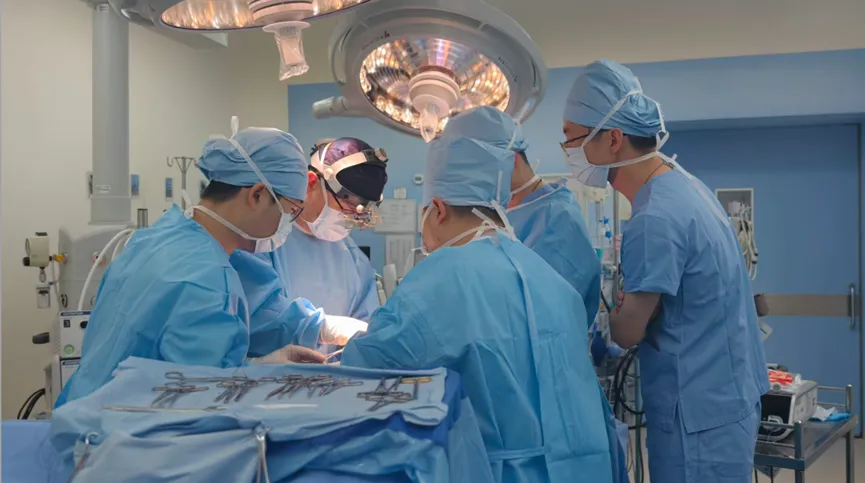
For this 14-year-old girl, this was not just a successful surgery; it meant saying goodbye to recurrent urinary tract infections and loss of bladder control, gaining a more stable life and broader room for growth.
For us, it was also more than just a successful surgery; it meant we could handle more complex perioperative management and post-operative care, providing safe and reliable medical services. Witnessing a life-changing miracle—is there anything more wonderful than this?
The story is not over; we are continuing to follow up and monitor the patient’s progress.
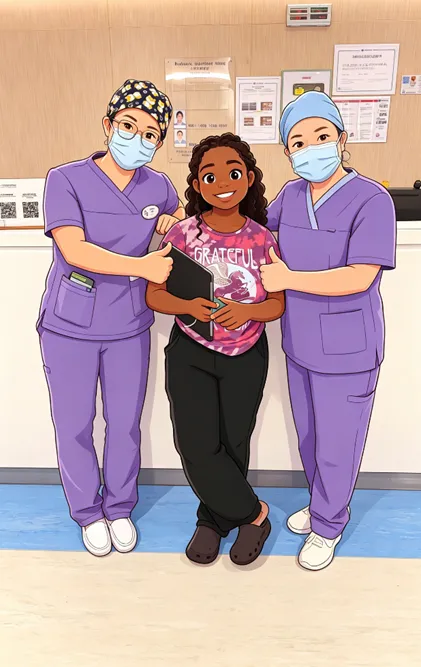
The success of this surgery marks a further enhancement of Guangzhou United Family Hospital’s technical capabilities in complex pediatric urinary reconstruction and rare disease surgery. In the future, the hospital will continue to rely on its multidisciplinary collaboration system and high-quality expert resources to provide systematic solutions for more children with complex and severe conditions.
Here, what was reconstructed was not just a bladder, but the infinite possibilities for a child’s future.