
When once-clear blood gradually thickens and the flow slows down, leading to the narrowing or blockage of coronary arteries that supply nutrients to the heart, coronary heart disease (CHD) occurs. At this critical “life and death” moment, it is urgent to quickly “clear the way” for the blood vessels to restore the vitality of both the vessels and the heart.
Coronary heart disease primarily refers to coronary atherosclerotic heart disease. As age increases, the prevalence of CHD shows a rapid upward trend. However, this disease also targets young people who stay up late and have irregular lifestyles. With the acceleration of population aging and urbanization, cardiovascular disease has become the “number one killer” threatening the health of Chinese residents.
The Report on Cardiovascular Health and Diseases in China (2024) shows that approximately 2 out of every 5 deaths are attributed to cardiovascular disease. Survey results from the “Cardiovascular Disease and Risk Factor Monitoring among Chinese Residents” project (2020-2022) show that the prevalence of CHD among residents aged ≥18 in China is 758 per 100,000.
Interventional therapy with stent implantation is one of the key treatment methods for vessel recanalization. Although stents have a development history of over 30 years, they inevitably have drawbacks—vessels cannot expand and contract freely, and they may trigger inflammation or re-stenosis.
Recently, Guangzhou United Family Hospital took the lead in introducing bioresorbable scaffolds (BRS) through the “Hong Kong and Macau Medicine and Equipment Connect” policy. Made of degradable materials such as polylactic acid or magnesium-aluminum alloy, these scaffolds “support the vessel” and then degrade and disappear, allowing the vessel to regain vitality and shortening the duration of medication for patients. Furthermore, it avoids the difficulties of future medical examinations caused by permanent metal stents, providing a new treatment option for coronary heart disease patients in need.
Treatment Selection: A “Combination Punch” to Protect the Heart
The treatment of coronary heart disease is a systematic project that requires a “combination punch.” Professor Mei Weiyi, Director of the Cardiology Department at Guangzhou United Family Hospital, pointed out that the core principles of treatment are controlling risk factors, clearing vascular paths, and protecting functions. This mainly includes lifestyle intervention, drug therapy, and interventional therapy.
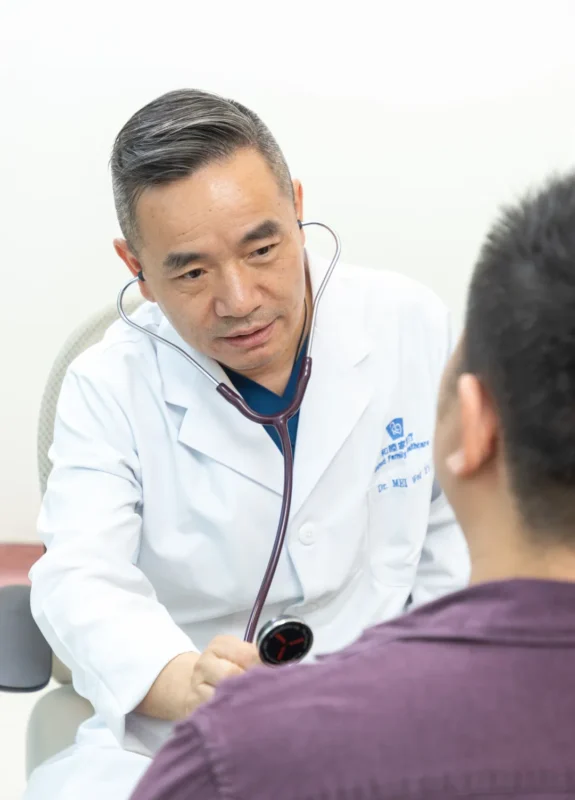
- Lifestyle Intervention: This is the foundation of CHD treatment and continues throughout the entire process. Measures such as “controlling diet, increasing exercise, adjusting mindset, and maintaining a regular routine” can control risk factors like blood lipids, blood pressure, and blood sugar.
- Drug Therapy: This is a crucial treatment method. Lipid-lowering drugs can delay the progression of atherosclerosis; antiplatelet drugs can inhibit platelet aggregation and reduce the risk of thrombosis. “It must be emphasized that CHD currently cannot be cured; patients need to take medication regularly for a long time. Stopping or reducing medication without authorization can lead to serious consequences,” said Professor Mei.
- Interventional Therapy & Bypass Surgery: When coronary artery stenosis is severe (exceeding 70%) and medication alone is limited, mechanical methods are needed. Interventional therapy involves implanting a stent to support the vessel. Bypass surgery, on the other hand, involves taking a healthy vessel from another part of the body to create a new blood supply channel. “The two methods are not mutually exclusive. For complex lesions in multiple locations, ‘hybrid surgery’ can be used to achieve optimal results.”
Evolution of Stents: From “Fixed Support” to “Vessel Regeneration”
As the core device of interventional therapy, the development of stents has witnessed continuous breakthroughs: from Bare Metal Stents (BMS) to Drug-Eluting Stents (DES), and now to Bioresorbable Scaffolds (BRS). “It can be said that stents have transformed from merely providing ‘fixed support’ to helping diseased vessels achieve ‘regeneration’,” said Professor Mei.
Traditional metal stents have obvious drawbacks:
- Permanent retention in the body causes vessels to lose elasticity and the ability to expand and contract freely.
- Long-term foreign body stimulation may trigger inflammatory reactions.
- Metal fatigue may lead to stent fracture.
- Importantly, metal stents can interfere with future examinations such as contrast-enhanced CT.
The Advantages of Magnesium-Aluminum Alloy Bioresorbable Scaffolds:
To overcome these limitations, the bioresorbable scaffold offers new hope. “Unlike traditional metal stents, degradable scaffolds are absorbed by the body after completing their mission of supporting the vessel,” Professor Mei explained.
The current most advanced magnesium-aluminum alloy degradable scaffolds have significant advantages:
- Shorter Medication Time: Magnesium and aluminum are essential trace elements. Once absorbed, if there are no other vascular issues, the duration of antiplatelet medication can be significantly shortened.
- Faster Degradation: Compared to polymer scaffolds (3-4 years), magnesium-aluminum alloy degrades in about 1 year, reducing the risk of late-stage thrombosis.
- Ultra-Thin Struts: “The struts are about 99 microns, as thin as a human hair,” noted Professor Mei. This causes less irritation to the vessel wall.
- Navigation Markers: Tantalum metal markers at both ends act as “navigation” for doctors, facilitating future treatments and examinations.
Application Scenarios: Precise Matching for Specific Patient Needs
Despite their advantages, bioresorbable scaffolds are not currently suitable for all CHD patients. Precise screening is required based on lesion characteristics.
Professor Mei introduced that current clinical applications are mainly suitable for patients with single-site, single-vessel, and simple short lesions that meet the “four non” conditions: non-tortuous, non-calcified, non-thrombotic, and non-bifurcation. “As technology improves, the scope of application will continue to expand.”
Important Reminder: Even after receiving a degradable stent, patients must strictly follow secondary prevention principles, maintaining lifestyle interventions and regular medication to prevent atherosclerosis in other vessels.
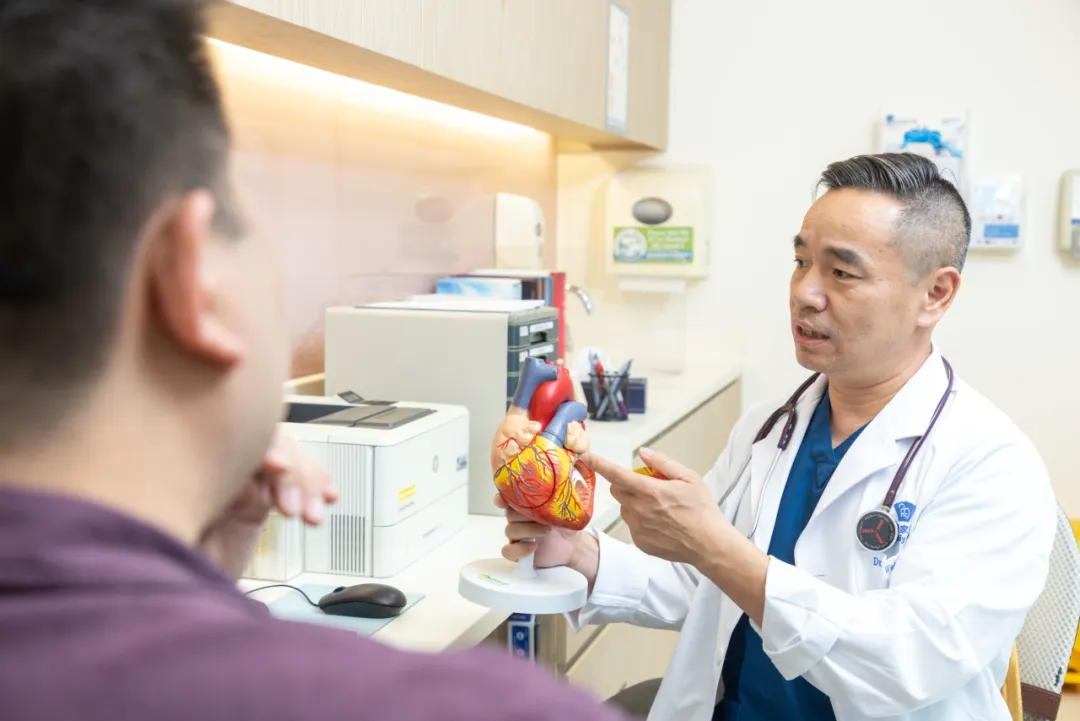
Health Science: Strict Prevention of “Heart” Disease in Winter
Winter is a peak season for cardiovascular and cerebrovascular diseases. Even in relatively warm Guangdong, the incidence rate increases significantly.
Cold stimulation causes blood vessels to contract strongly or even spasm. For patients with existing atherosclerotic plaques, vascular spasms may rupture the plaques, forming acute blood clots and leading to acute myocardial infarction.
Professor Mei Weiyi’s Winter Tips:
- Control Risk Factors: Keep blood pressure, blood sugar, and lipids within target ranges.
- Keep Warm: Protect the head and neck. Wear hats and scarves when going out.
- Adjust Exercise: Avoid morning exercise during low temperatures; choose the afternoon instead and avoid strenuous activity.
- Elderly Care: Quit smoking and limit alcohol. Ensure indoor air circulation but avoid oxygen deficiency.
- Diet & Activity: Avoid a sedentary lifestyle and high-fat, high-oil diets to control lipid levels.
“The prevention and treatment of coronary heart disease is a ‘protracted war’,” said Professor Mei. With the continuous maturation of bioresorbable scaffold technology, it will bring hope to more patients and protect the “heart channels” of life.