

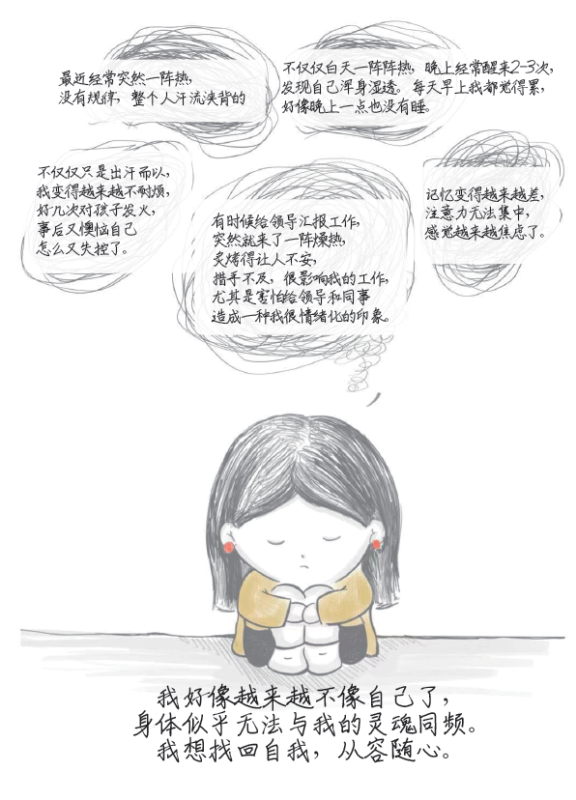
We often hear women around the age of 50 complain: “During Guangzhou’s best season, while everyone else is comfortable, I’m the only one experiencing sudden waves of heat and drenching sweat from morning to night. I can’t sleep well at night, often waking up in the middle of the night soaked through. It was only after Dr. Chen’s patient explanation that I realized this is abnormal temperature regulation caused by menopause.”
In fact, women suffering from hot flashes and night sweats are not alone. From China to South Korea, and from Asia to Europe, 80% of women aged 40 to 65 experience these symptoms. It is called Vasomotor Symptoms (VMS) of menopause, commonly known as hot flashes and night sweats. These symptoms can last for a long time—usually 5 years, and up to 7 years for some. “Toughing it out” is not realistic; it is essential to see a doctor for medical treatment.
01 Why do hot flashes and night sweats occur?
Many women wonder why their bodies suddenly start experiencing hot flashes during the day and waking up from sweats at night. To put it simply: the system that maintains our normal body temperature has malfunctioned, much like a home air conditioner that suddenly stops cooling because a part is broken.
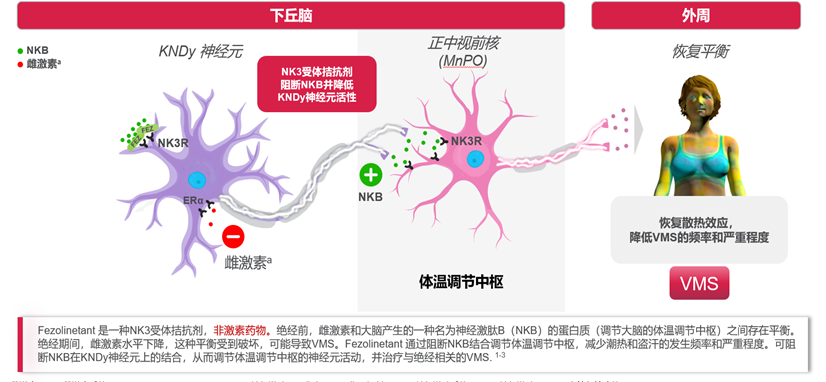
This “part” is located in our brain. It relies on a balance between estrogen and a substance called NKB (Neurokinin B) to maintain our normal body temperature between 36.5°C and 37.5°C. During menopause, declining ovarian function leads to a sharp drop in estrogen levels, breaking this balance. The threshold for core body temperature significantly decreases (for example, from 37°C to 36.7°C), causing the body to misjudge that it is “overheating,” which triggers an abnormal cooling response. This is the direct cause of hot flashes and night sweats.
02 How can hot flashes and night sweats be resolved?
Since the symptoms are caused by a decrease in estrogen due to declining ovarian function, can we simply replenish the estrogen? This logic is simple and efficient. But if the ovaries have aged and stopped working, how do we supplement it?
There are many methods and medications available. The simplest is Hormone Replacement Therapy (HRT) using oral estrogen, which is safe, efficient, and carries controllable risks. Many women have restored their normal lives and regained happiness through this treatment.
However, some women are unable to use estrogen. This includes those who have unfortunately suffered from malignant tumors such as breast cancer, endometrial cancer, ovarian cancer, or certain types of cervical cancer, where the ovaries were removed or have withered after treatment. Others with active venous or arterial thromboembolic diseases (such as myocardial infarction or stroke) or severe liver and kidney dysfunction also cannot supplement estrogen. Conditions like obesity, diabetes, fibroids, and endometriosis also make estrogen supplementation a difficult choice. Furthermore, some women, despite being in good health, firmly refuse hormone therapy and choose to endure the symptoms. Why suffer? This large group of women should not be left without options. What treatment should be chosen? While both doctors and patients have been faced with this dilemma, the global launch of Veoza (Fezolinetant) has brought hope to these women.
03 Mechanism of Veoza (Fezolinetant)
Veoza (Fezolinetant) is the world’s first approved non-hormonal, selective Neurokinin 3 (NK3) receptor antagonist for the treatment of menopausal vasomotor symptoms. Fezolinetant works by blocking the binding of NKB (Neurokinin B) to KNDy neurons, thereby regulating the neuronal activity of the thermoregulatory center. It treats menopause-related VMS while improving sleep, serving as a vital supplement and treatment option for menopausal care.
Since May 12, 2023, it has received official approval from the US FDA, European EMA, and the Pharmacy and Poisons Board of Hong Kong, and is currently approved for marketing in 44 countries and regions.
In exciting news for female patients: Guangzhou United Family Hospital has obtained the “Urgent Clinical Need” import qualification for “Veoza” under the Greater Bay Area “Medicine and Equipment Connect” policy. The medication is now in stock and available for clinical treatment.
Important Reminder:
Women who are currently receiving cancer treatment (e.g., chemotherapy, radiotherapy, or anti-hormonal therapy) for breast cancer or other estrogen-dependent malignancies were not included in current clinical studies. For safety and efficacy reasons, Veoza (Fezolinetant) is not recommended for use in populations currently undergoing cancer treatment. For women with a history of breast cancer or other estrogen-dependent malignancies who are no longer receiving cancer treatment, the decision to use Veoza should be made by a doctor based on an individual benefit-risk assessment.